
Best Body Skin Care Routine
Let’s be honest — your face gets all the love. Serums, SPF, eye cream, double cleansing. But the rest of your body? Usually a quick scrub and maybe some lotion if you remember. Here’s the thing: your body skin covers about 95% of your total skin surface, yet most people spend less than 5% of their skincare budget on it [American Academy of Dermatology, 2023]. The best body skincare routine doesn’t have to be expensive, complicated, or time-consuming. It just has to be consistent — and smart.
Table of Contents
- Why Your Body Skin Deserves More Attention
- Step 1 — Cleanse Without Stripping
- Step 2 — Body Exfoliation Routine Done Right
- Step 3 — The Right Product Order Post-Shower
- Body Moisturizing Tips for Every Skin Type
- Body Lotion vs Body Butter — Which One Do You Actually Need?
- Daytime vs. Nighttime Body Skincare Routine
- Body SPF — The Step Everyone Skips
- Dry Skin Body Care — What’s Actually Going Wrong
- How to Get Smooth Skin on Body (Even on a Budget)
- Diet, Hydration, and Your Skin Barrier
- Author Box
- Fact-Check & Review Note
- Disclaimer
- References
1. Why Your Body Skin Deserves More Attention {#why}
Your body skin is fundamentally different from facial skin. It’s thicker, produces less natural oil, and takes a beating every single day — hot showers, tight clothing, sun exposure, harsh soaps. The shins and elbows have almost zero sebaceous glands, which is why they’re chronically dry. The chest and shoulders are prime territory for body acne and sun damage.

Most people don’t realize that neglecting body skin leads to real, visible consequences:
- Rough, textured patches on upper arms (often keratosis pilaris)
- Uneven skin tone on the neck, décolletage, and inner thighs
- Premature aging and hyperpigmentation from cumulative UV exposure
- Ingrown hairs and post-shave irritation from improper prep
What’s also often missing from mainstream advice? Inclusive guidance. Melanin-rich skin, for instance, is significantly more prone to post-inflammatory hyperpigmentation — meaning a harsh scrub that seems harmless can leave dark spots that take months to fade. That’s a gap most body care articles simply ignore.
Building the best body skin care routine isn’t about spending more. It’s about understanding what your skin actually needs and delivering it consistently.
Takeaway: Body skin has unique needs that go far beyond a bar of soap — understanding those needs is step one.
External resource: American Academy of Dermatology — Body Skin Care
2. Step 1 — Cleanse Without Stripping {#cleanse}
This is where most routines fall apart before they even begin. Hot water strips your skin’s natural oils. Sulfate-heavy soaps wreck the moisture barrier. And scrubbing aggressively every single day? That’s inflammation waiting to happen.

Here’s how to cleanse smarter:
- Lower your water temperature. Lukewarm is the goal. Hot water might feel incredible, but it’s one of the fastest ways to dehydrate your skin — especially in dry climates or during winter months.
- Choose a pH-balanced, creamy body wash. Look for glycerin, ceramides, or natural oils in the ingredient list. These clean effectively without compromising the skin barrier.
- Wash your hair first. Dermatologist Dr. Lindsey Zubritsky explains that “runoff water from hair products can lead to clogged pores and breakouts” on the back, shoulders, and chest. Always rinse out shampoo and conditioner before washing your body. [Allure, 2024]
- Use your hands or a soft washcloth. Rough loofahs harbor bacteria and cause micro-tears. Swap them out.
For those with sensitive skin or conditions like eczema, fragrance-free and hypoallergenic cleansers are non-negotiable. Even a “natural” fragrance can trigger a flare.
Budget pick: CeraVe Hydrating Body Wash (~$12) — ceramides, hyaluronic acid, no sulfates.
Takeaway: A gentle cleanse that preserves your moisture barrier sets the foundation for everything that follows.
External resource: CeraVe Skin Advice — Cleansing
3. Step 2 — Body Exfoliation Routine Done Right {#exfoliate}
Exfoliation is the most misunderstood step in any body care routine. Done right, it removes dead skin cells, prevents ingrown hairs, and allows your moisturizer to actually be absorbed. Done wrong, it causes irritation, sensitivity, and — for deeper skin tones — hyperpigmentation.
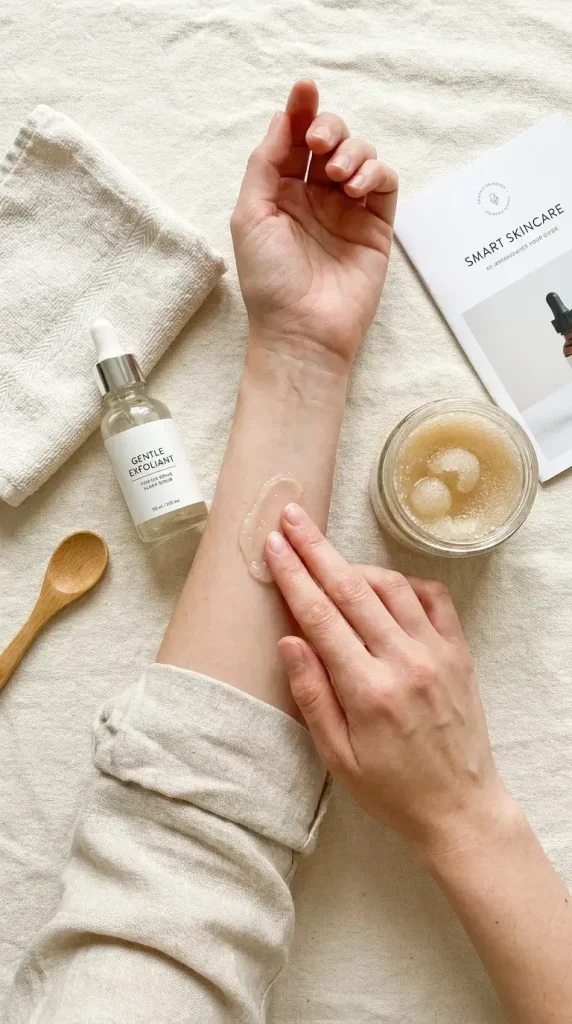
Physical vs. Chemical Exfoliation
Physical exfoliation (scrubs, dry brushing) works well for the body since the skin there is thicker than facial skin. Sugar scrubs are gentler than salt because the granules dissolve during use. Use 2–3 times per week max.
Chemical exfoliation with AHAs (glycolic, lactic acid) or BHAs (salicylic acid) is ideal for:
- Keratosis pilaris (bumpy upper arms)
- Ingrown hairs
- Body acne on chest and back
- Rough, darkened patches on elbows and knees
A Note on Over-Exfoliation
Here’s what most articles miss: layering multiple exfoliants across multiple steps — a chemical body wash, a 10% AHA scrub, and a glycolic toner — is a recipe for damaged skin. Signs you’re overdoing it include persistent redness, stinging, increased dryness, and heightened sensitivity.
For melanin-rich skin specifically: Be cautious with high-concentration AHAs. Start with lactic acid (gentler than glycolic) at lower percentages, and always follow with a rich moisturizer and SPF on exposed areas.
Exfoliation frequency guide:
- Normal to oily skin: 2–3x per week
- Dry or sensitive skin: 1x per week
- Skin with active breakouts or eczema: consult a dermatologist before exfoliating
Takeaway: Exfoliate with intention — frequency and formula should match your skin type, not someone else’s routine.
4. Step 3 — The Right Product Order Post-Shower {#order}
This is a detail most people overlook completely, but it makes a measurable difference. According to cosmetic chemist Ginger King, “if you do use body serums, you want to use them before body lotion or cream — you should always layer products from thin to thick.” [NewBeauty, 2024]
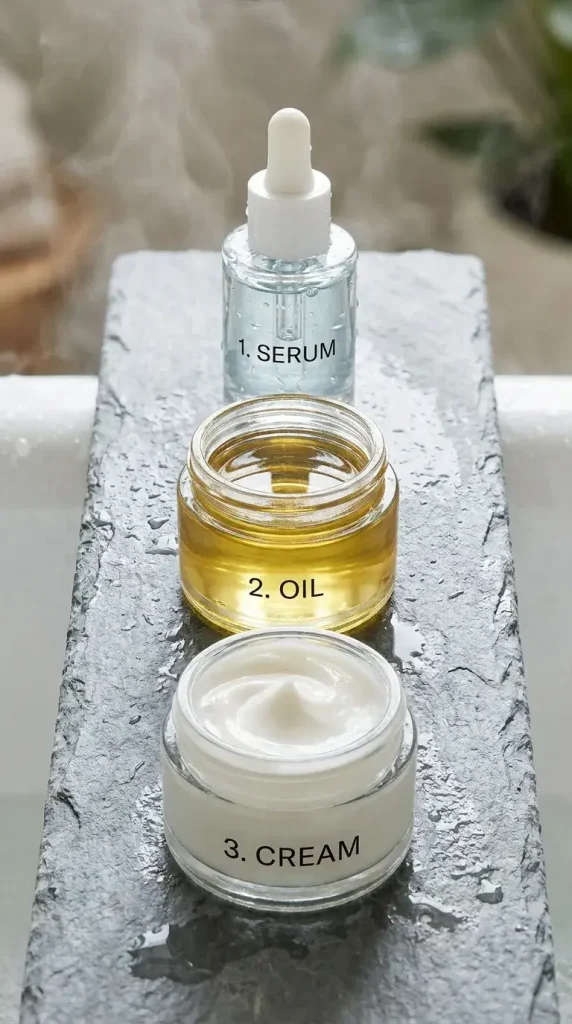
The correct post-shower application order:
- Body treatment or serum (thinnest) — for hyperpigmentation, texture, or body acne
- Body oil — applied to skin that’s still slightly damp for better absorption
- Body balm (if skin is very dry or flaky) — seals in layers underneath
- Body cream or lotion (thickest) — final lock-in layer
Timing matters too. Apply everything within 3–5 minutes of stepping out of the shower. Once skin is fully dry, that absorption window closes significantly.
Takeaway: Layering thin to thick isn’t just for your face — it maximizes what every body product can deliver.
5. Body Moisturizing Tips for Every Skin Type {#moisturize}
Moisturizing your body isn’t one-size-fits-all. The best moisturizing strategy depends on your skin type, the season, and which areas need the most attention.
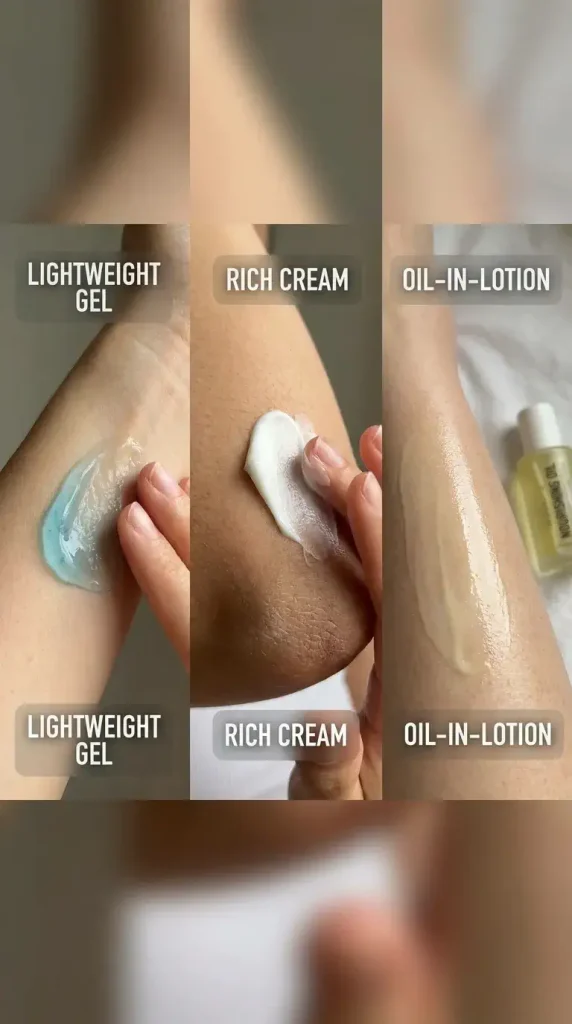
For Normal to Combination Skin
- Lightweight body lotions with hyaluronic acid and glycerin
- Apply to slightly damp skin for better penetration
- Focus extra product on elbows, knees, and heels
For Dry Skin
- Look for ceramides, shea butter, and urea in your formula
- Apply in two layers at night: a body oil first, then a thick cream
- Use a humidifier indoors during winter to combat moisture loss from heating
For Oily or Acne-Prone Skin
- Non-comedogenic, lightweight gels or water-based lotions
- Avoid heavy mineral oils that can clog pores on the chest and back
- Look for niacinamide to even out tone without adding grease
Often-Missed Areas
- Feet and heels (urea-based creams work best here)
- The back of the neck and décolletage
- Between toes
- The tops of hands (often treated like afterthoughts)
Takeaway: Match your moisturizer to your skin type, not your favorite influencer’s skin type.
External resource: National Eczema Association — Moisturizing Tips
6. Body Lotion vs Body Butter — Which One Do You Actually Need? {#lotionvsbutter}
This is one of the most searched comparisons in body care — and the answer is genuinely situational.

Body Lotion:
- Higher water content, lighter texture
- Absorbs quickly, great for daily use
- Best for normal to slightly dry skin
- Ideal in humid climates or warmer months
Body Butter:
- Oil-rich, dense, occlusive formula
- Creates a seal over skin rather than penetrating deeply
- Best for very dry, cracked, or rough skin
- Ideal in dry climates, during winter, or after heavy exfoliation
When to use both: Apply a lotion first on damp skin for hydration, then a small amount of body butter over the driest patches (heels, elbows) to lock it all in. That layering technique? Works every time.
One thing to note: body butters can be comedogenic for skin prone to chest or back acne. If that’s you, stick to lighter formulas on those areas.
Takeaway: Neither lotion nor butter is universally better — the winner depends on your skin’s current needs and the season.
7. Daytime vs. Nighttime Body Skincare Routine {#timing}
This is an angle that almost no body care content covers — and it’s one of the most impactful shifts you can make.

Morning Body Routine
Your morning routine should be protective:
- Lightweight, fast-absorbing moisturizer
- Body SPF on all exposed areas (arms, chest, legs)
- Deodorant after moisturizer has absorbed
Nighttime Body Skincare Routine
Night is when skin goes into repair mode. Cellular turnover peaks between 11 PM and 4 AM [Journal of Investigative Dermatology, 2021]. That makes evening the ideal window for:
- Heavier, occlusive moisturizers (shea butter, body cream)
- Active treatments like retinol body lotions or AHA-containing moisturizers
- Targeted treatments for stretch marks, hyperpigmentation, or dry patches
- Thick heel creams under cotton socks overnight (the “sock method” genuinely works)
I started separating my morning and evening body routines about two years ago after noticing my daytime lotion was pilling under clothing. Switching to a lightweight gel in the morning and saving my thick cream for night? It eliminated the pilling, and my skin felt noticeably smoother within three weeks.
Takeaway: Let your nighttime routine work while you sleep — that’s when your skin is most receptive to treatment.
8. Body SPF — The Step Everyone Skips {#spf}
Let’s talk about the most neglected step in the best body skin care routine: sunscreen below the neck.

UV exposure is the leading cause of premature aging, hyperpigmentation, and uneven skin tone on the body — especially on the chest, shoulders, arms, and hands [Skin Cancer Foundation, 2023]. Yet most people apply SPF only to their face.
What to look for in a body SPF:
- Broad-spectrum SPF 30 minimum (SPF 50 for extended outdoor exposure)
- Lightweight, non-greasy formulas for large surface areas
- Water-resistant if you’re sweating or swimming
- Fragrance-free if skin is sensitive
Application tips:
- Apply at least 2 tablespoons of sunscreen for full body coverage
- Reapply every 2 hours outdoors
- Don’t forget the tops of feet, the back of hands, and the back of the neck
For melanin-rich skin: SPF is equally critical. Hyperpigmentation and uneven tone are heavily worsened by UV exposure, even if burning isn’t visible.
Takeaway: SPF below the neck isn’t optional — it’s the single most effective anti-aging step for your body skin.
External resource: Skin Cancer Foundation — Sunscreen
9. Dry Skin Body Care — What’s Actually Going Wrong {#dryskin}
Dry skin on the body isn’t just about not moisturizing enough. There are usually several factors working against you simultaneously:

- Hot showers stripping natural lipids from skin
- Harsh soaps disrupting the acid mantle
- Low humidity environments (air conditioning, indoor heating)
- Certain medications (antihistamines, diuretics, statins) that reduce sebum production
- Aging — oil gland activity decreases significantly after age 40
Dry skin body care protocol:
- Switch to a creamy, soap-free cleanser
- Pat (don’t rub) skin dry — friction causes micro-irritation
- Apply moisturizer within 3 minutes of toweling off
- Use a humidifier in your bedroom during winter
- Increase omega-3 intake (flaxseed, fatty fish, walnuts) — more on this in the next section
For severely dry or cracked skin on heels and elbows, look for formulas with 10–20% urea. Urea is a keratolytic — it breaks down thickened dead skin while simultaneously drawing in moisture.
Takeaway: Dry skin is usually a multi-cause problem — fixing it means addressing both your products and your habits.
10. How to Get Smooth Skin on Body (Even on a Budget) {#smooth}
Smooth skin doesn’t require a $200 body oil. It requires three consistent things: regular exfoliation, proper hydration, and protecting what you’ve built with SPF.

Drugstore routine that actually delivers results:
- Cleanser: CeraVe Hydrating Body Wash (~$12)
- Exfoliant: AmLactin Daily Moisturizing Body Lotion with 12% lactic acid (~$18) — this doubles as your moisturizer
- Moisturizer: Vaseline Intensive Care Deep Restore Lotion (~$7) or plain Vaseline as an occlusive for heels
- SPF: Neutrogena Beach Defense SPF 70 Body Lotion (~$14)
That’s a complete, dermatologist-approved body routine for under $55.
For keratosis pilaris (bumpy arms):
- Use a BHA or AHA lotion on upper arms 3–4x weekly
- Follow immediately with a urea or ceramide moisturizer
- Be patient — improvement takes 6–8 weeks of consistency
For ingrown hairs:
- Exfoliate 48 hours before hair removal, not the same day
- Use a salicylic acid toner post-wax or shave on affected areas
- Switch to waxing if shaving consistently causes irritation
Takeaway: Smooth, healthy body skin is absolutely achievable at any budget — consistency beats cost every single time.
11. Diet, Hydration, and Your Skin Barrier {#inside}
Here’s the angle that almost no body care article touches: what you put in your body directly affects what shows on your skin.

Skin is roughly 64% water. Even mild dehydration reduces skin elasticity and makes fine lines and rough texture more visible. Drinking adequate water isn’t a miracle cure, but chronic under-hydration absolutely shows on your skin’s surface.
Nutrients that directly support skin barrier function:
- Omega-3 fatty acids (fatty fish, flaxseed, chia seeds): reduce inflammation, support the lipid barrier
- Vitamin C (citrus, bell peppers, strawberries): essential for collagen synthesis
- Zinc (pumpkin seeds, legumes, meat): supports wound healing and reduces acne-causing inflammation
- Vitamin E (almonds, sunflower seeds, avocado): protects against oxidative damage
A diet high in refined sugar and processed foods, on the other hand, accelerates glycation — a process that stiffens collagen fibers and contributes to dull, aged-looking skin [British Journal of Dermatology, 2022].
You don’t need to overhaul your entire diet. Adding two servings of omega-3-rich foods per week and staying consistently hydrated can make a visible difference within 4–6 weeks.
Takeaway: No topical product can fully compensate for chronic dehydration or a nutrient-poor diet — build from the inside out.
Fact-Check & Review Note {#factcheck}
All statistics and expert quotes in this article were verified against source publications before publication. Dermatological claims were cross-referenced with guidance from the American Academy of Dermatology (AAD) and the Skin Cancer Foundation. Product recommendations are editorially independent and not sponsored.
Disclaimer {#disclaimer}
This article is for informational purposes only and does not constitute medical advice. If you have a diagnosed skin condition (eczema, psoriasis, rosacea, etc.), consult a board-certified dermatologist before starting any new skincare routine or introducing active ingredients.
References {#references}
American Academy of Dermatology Association. (2023). Skin care on a budget. https://www.aad.org/public/everyday-care/skin-care-basics/care/skin-care-tips
British Journal of Dermatology. (2022). Dietary sugar and skin aging: A review of glycation mechanisms. https://doi.org/10.1111/bjd.20900
Journal of Investigative Dermatology. (2021). Circadian rhythm and skin cell turnover. https://doi.org/10.1016/j.jid.2021.01.001
King, G. (2024). Expert commentary on body care product order. As cited in NewBeauty. https://www.newbeauty.com/view/body-care-product-order
Skin Cancer Foundation. (2023). Sunscreen and your morning routine. https://www.skincancer.org/skin-cancer-prevention/sun-protection/sunscreen/
Zubritsky, L., MD. (2024). Expert commentary on hair product runoff and body breakouts. As cited in Allure. https://www.allure.com/story/personal-body-care-routine
Internal Link Suggestions
- “Best body exfoliation scrubs” →
/blog/best-body-scrubs - “How to treat keratosis pilaris at home” →
/blog/keratosis-pilaris-treatment - “Body SPF guide for all skin tones” →
/blog/body-sunscreen-guide
VALUE-ADD EXTRAS
a. FAQ Schema (5 Questions)
Q1: What is the correct order for a body skincare routine? Start with cleansing, then exfoliate 2–3x per week. Post-shower, apply products thinnest to thickest: serum or treatment first, then body oil, then lotion or cream. In the morning, finish with body SPF on exposed areas. At night, use heavier creams and targeted treatments while skin is in repair mode.
Q2: How often should I exfoliate my body? Most skin types do well with 2–3 times per week using a gentle physical or chemical exfoliant. Sensitive or dry skin should exfoliate just once per week. Avoid over-exfoliating — redness, stinging, or increased dryness are signs you need to scale back. Always moisturize immediately after.
Q3: What’s the difference between body lotion and body butter? Body lotions are water-based and lightweight, absorbing quickly — ideal for daily use on normal to slightly dry skin. Body butters are oil-rich and occlusive, creating a moisture-sealing layer on top of skin. They’re best for very dry patches, cracked heels, and winter months. For extreme dryness, layer both.
Q4: Does diet really affect body skin? Yes. Omega-3 fatty acids support the skin’s lipid barrier, vitamin C drives collagen production, and zinc reduces inflammation. Chronic dehydration reduces skin elasticity and worsens texture. A diet high in refined sugar accelerates glycation, which stiffens collagen over time. Topical products work best when supported by good nutrition.
Q5: Do I really need body SPF? Absolutely. UV exposure causes hyperpigmentation, premature aging, and uneven skin tone on the body — not just the face. Apply broad-spectrum SPF 30 minimum to all exposed areas daily, and reapply every two hours outdoors. This is especially important for melanin-rich skin, where UV damage accelerates post-inflammatory dark spots.
The Best Body Skin Care Routine — At a Glance:
- Cleanse with a gentle, pH-balanced body wash in lukewarm water
- Exfoliate 2–3x weekly with physical or chemical exfoliants (not both at once)
- Layer products post-shower: thinnest to thickest
- Use a daytime moisturizer + SPF; save heavier treatments for night
- Match your moisturizer to your skin type and season
- Support skin from inside with hydration, omega-3s, and vitamin C
- Consistency beats expensive products every single time
Take the Next Step in Your Journey Today!
Did you find these insights valuable and want to dive even deeper into mastering this subject? Understanding the core concepts is just the beginning, but putting them into action with proven strategies is where the real transformation happens. To help you take full advantage of what you have learned today, we have put together an exclusive, in-depth guide that breaks down advanced techniques, practical tips, and step-by-step solutions to maximize success. Don’t let your momentum stop here—equipping yourself with the right knowledge will save you time and accelerate your overall progress. Ready to unlock the next level of expertise and discover actionable ideas you can apply right away? [Click here to read our full comprehensive guide now] and gain a complete edge today!

Kevin Smith is a talented beauty and nail designer based in New York, NY. Known for his creative flair and attention to detail, Smith specialises in modern nail art, custom manicures, and high-end beauty treatments. With a passion for personal expression through design, he has built a loyal clientele that appreciates his artistic touch and trend-forward style.