12 Reasons to Switch to Short Press-On Nails
Meta Description: Ready to ditch the acrylics? Discover 12 expert-backed reasons why short press-on nails are the damage-free, affordable manicure trend taking over in 2025.
Introduction
Let me be honest with you. I spent three years with a standing biweekly acrylic appointment, convinced it was the only way to have nails worth photographing. Then my nail tech said something that stopped me cold: “Your natural nails are so thin I can barely work with them.” That was my wake-up call — and the beginning of my love affair with short press-on nails.
If you’ve been considering making the switch, this guide is for you. We’re cutting through the noise and giving you 12 solid, experience-backed reasons why ditching the acrylics and embracing trendy short press-ons is one of the best beauty decisions you’ll make this year. No fluff. No vague promises. Just the real story.
Table of Contents
- Your Natural Nails Will Finally Breathe
- The True Cost Comparison Might Shock You
- Application Is Genuinely Easy (With the Right Prep)
- Short Press-Ons Are More Hygienic Than You Think
- The Nail Art Possibilities Are Endless
- They’re Kinder to Sensitive Skin and Allergy-Prone Clients
- Reusable Sets Make Them Eco-Friendlier
- Recovery From Acrylic Damage Is Real — and Possible
- The Durability Gap Is Closing Fast
- Short Nails Are a Full-Blown Trend, Not a Compromise
- Press-Ons Are Safer for Your Lifestyle
- Your Mental Load Goes Down
- FAQ
- TL;DR
- Social Media Captions
- Image Prompts
- References
1. Your Natural Nails Will Finally Breathe
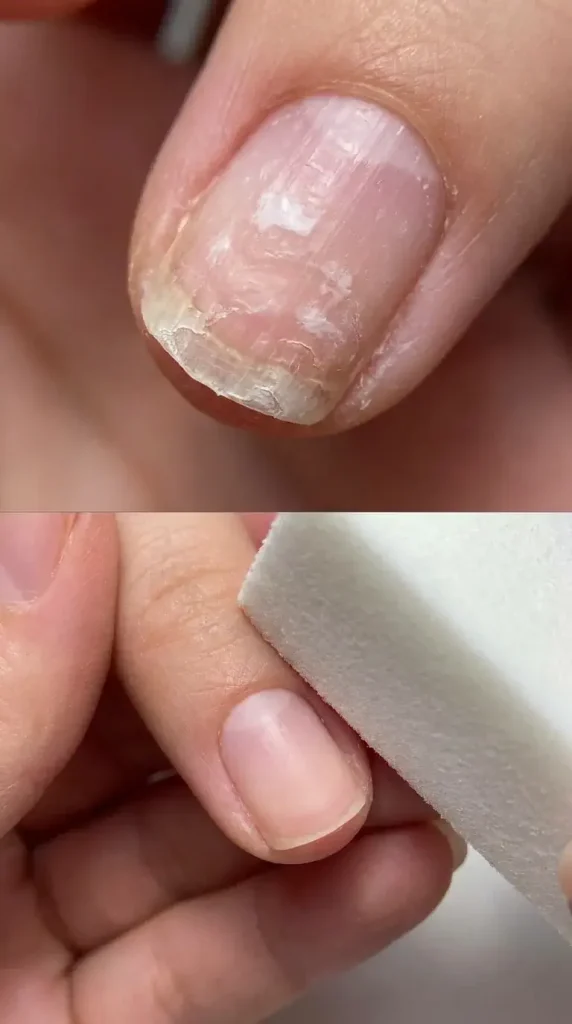
Acrylic nails require a key step that most people underestimate: the file-down. Before any product is applied, your nail technician abrades the surface of your natural nail to help the acrylic bond. Do that every two to three weeks for a year, and the cumulative damage is significant. We’re talking thinner nail plates, increased sensitivity, and in some cases, a condition called onycholysis — where the nail separates from the bed.
According to the American Academy of Dermatology (AAD), repeated use of nail enhancements can lead to brittle nails, surface irregularities, and contact dermatitis in sensitized individuals [AAD, 2023].
Short press-on nails skip all of that. There’s no filing into the natural nail, no drilling, and no MMA (methyl methacrylate) monomer — a chemical found in some low-grade acrylic powders that’s been flagged by the FDA for safety concerns. You prep, size, and press. That’s it.
What “Nail Recovery” Actually Looks Like
It’s not instant. When I ditched acrylics, it took about eight weeks before my nails stopped peeling and flaking. By month three, they had regained normal thickness. Dermatologists typically recommend a minimum four-to-six-week break from any nail enhancement to allow full surface regeneration [Journal of the European Academy of Dermatology and Venereology, 2022].
Press-ons, especially those applied with adhesive tabs rather than glue, allow you to maintain a polished look while your natural nails recover. That’s something acrylics simply cannot offer.
Takeaway: Every two-week acrylic fill quietly chips away at your nail’s structural integrity — press-ons let you have beautiful nails without that trade-off.
Internal link suggestion: “Natural Nail Recovery Guide” →
/blogs/nail-health/natural-nail-recovery-after-acrylics
2. The True Cost Comparison Might Shock You
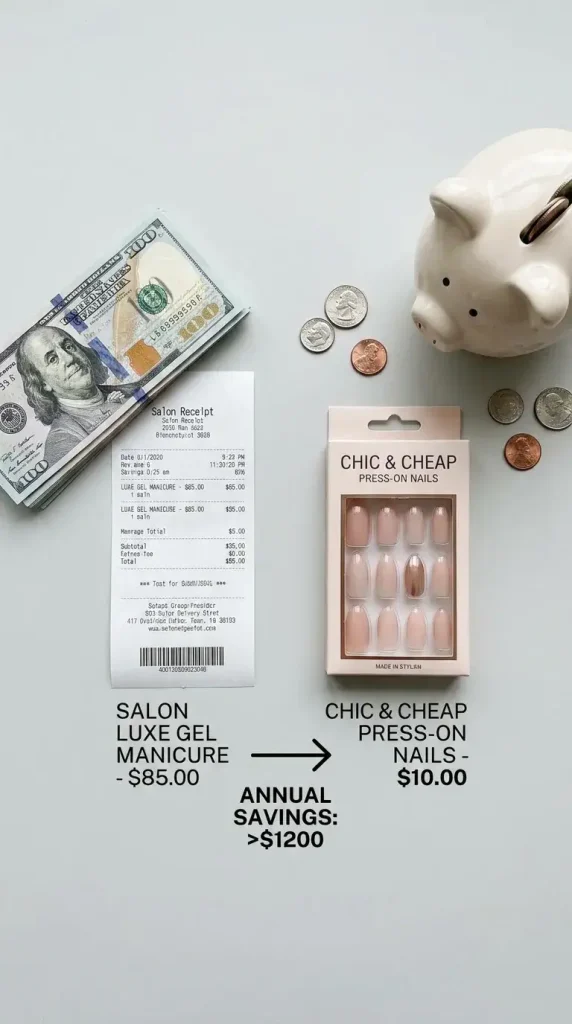
Let’s do math that most beauty articles skip entirely.
Acrylic nail cost breakdown (US average):
- Initial full set: $45–$65
- Biweekly fill: $25–$40
- Monthly removal/full redo: $55–$75
- Annual total (conservative): $780–$1,300+
That doesn’t include tips, travel, or the occasional broken nail repair visit.
Press-on nail cost breakdown:
- Mid-range press-on set: $8–$25
- Nail glue or adhesive tabs: $4–$8
- Apply twice a month: ~$24–$66/month
- Annual total: $288–$792
The savings floor is around $490 per year. The ceiling, if you’re buying reusable sets that last three to five wears, is well over $1,000 annually.
The Hidden Cost Nobody Mentions
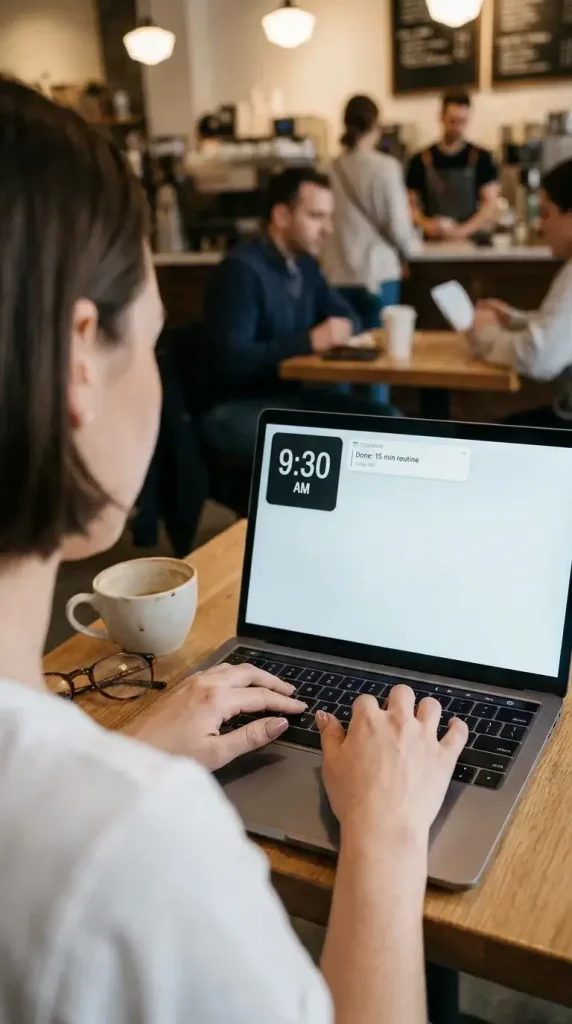
Time is money. The average acrylic appointment runs 60–90 minutes, biweekly. That’s 26–39 hours per year sitting in a salon chair. With press-ons, application takes 15–20 minutes at home. You’re reclaiming nearly a full work week.
Takeaway: Press-ons aren’t just the budget-friendly choice — they’re the time-smart choice for women who have places to be.
Internal link suggestion: “Best Affordable Press-On Nail Brands” →
/blogs/nail-trends/best-affordable-press-on-nails
External authoritative link: Consumer Price Index: Personal Care Services — US Bureau of Labor Statistics
3. Application Is Genuinely Easy (With the Right Prep)

Here’s where honesty matters. Press-ons have a reputation for popping off after two days, and sometimes that reputation is earned — but only when application is rushed. Done properly, a good set lasts 1–3 weeks without drama.
The correct press-on application process:
- Push back and lightly buff cuticles
- Wipe nails with isopropyl alcohol (removes oils — this step is non-negotiable)
- Size each nail before applying any adhesive
- Apply a thin, even layer of nail glue or press firmly with adhesive tabs
- Hold each nail for 30–60 seconds with steady pressure
- Avoid water for at least one hour after application
Skip step two, and you’ve essentially glued plastic to a greasy surface. That’s why so many first-timers get poor results — not because press-ons don’t work, but because the prep was incomplete.
Adhesive Tabs vs. Nail Glue
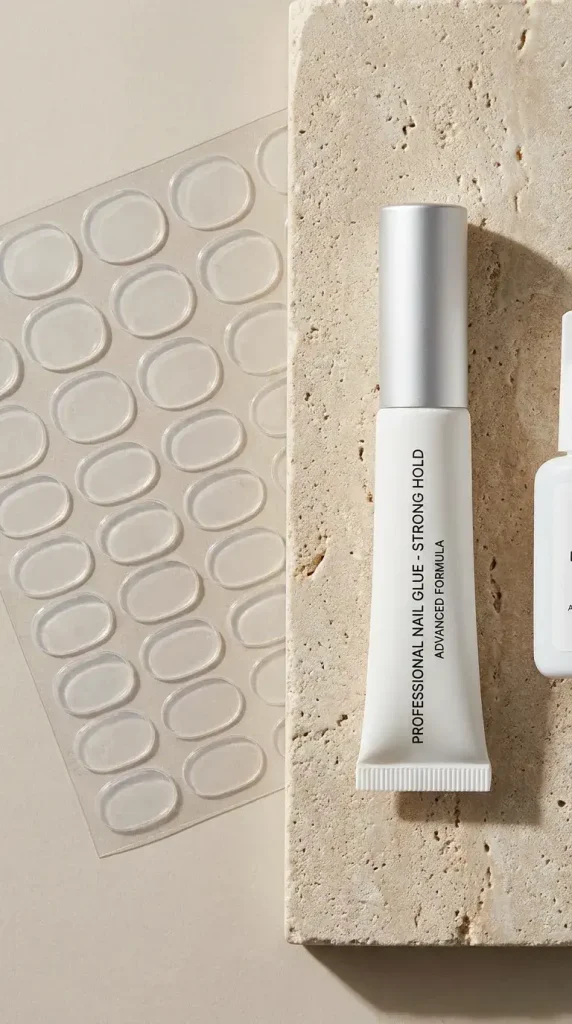
This is a genuine choice with real trade-offs:
- Nail glue bonds more firmly, lasts longer (2–3 weeks), and is better for active lifestyles
- Adhesive tabs are gentler on natural nails, easier to remove, and ideal for short-term wear (events, weekends)
- Hybrid options (gel-based adhesives) sit in the middle and are increasingly popular with the reusable press-on community
Takeaway: Proper prep is 80% of the equation — master it once and press-ons become genuinely reliable.
4. Short Press-Ons Are More Hygienic Than You Think
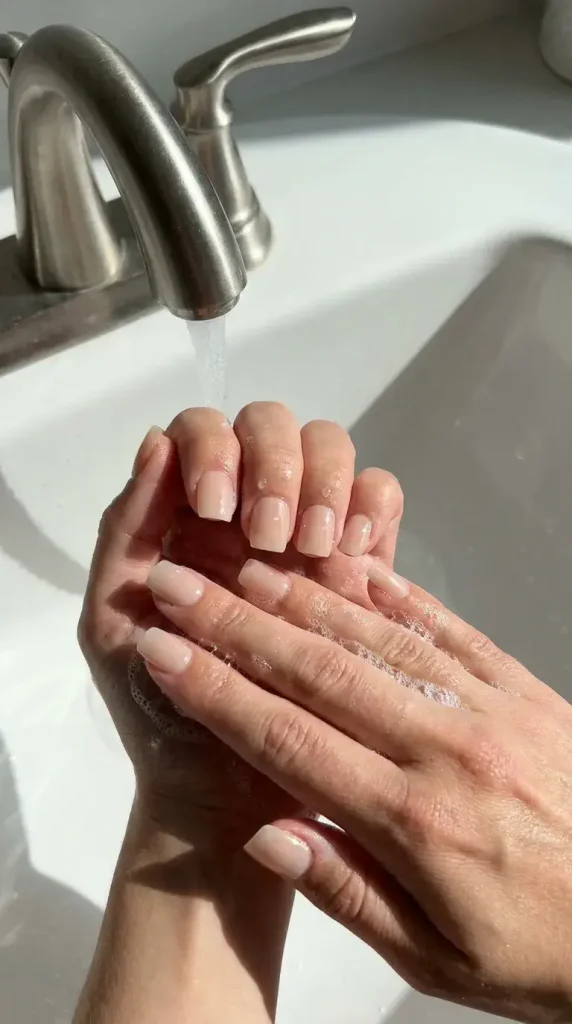
Long nails — acrylic or natural — trap bacteria. A 2018 study published in the American Journal of Infection Control found that healthcare workers with artificial nails harbored significantly more pathogens under their nails than those with natural, short nails [AJIC, 2018].
Short press-ons flip that dynamic entirely. There’s minimal space underneath for bacteria, food particles, or moisture to accumulate. For anyone who cooks, handles children, works in healthcare, or simply values cleanliness, this is a meaningful advantage.
Beyond bacteria, acrylics present a specific moisture risk. The seal between the acrylic and the natural nail can lift slightly, creating a warm, humid gap — ideal conditions for a fungal infection called tinea unguium. Short press-ons, which sit flat and close to the nail bed, don’t create the same trapped-moisture environment.
Takeaway: Short press-ons are genuinely cleaner to wear, especially for women with active, hands-on lifestyles.
5. The Nail Art Possibilities Are Endless

Let’s address the creative concern head-on. Short nails offering a “limited canvas” is an outdated take. The nail art community on Instagram and TikTok has completely dismantled that idea over the past three years.
What short press-ons do brilliantly:
- Negative space designs
- French tips (classic and colored variations)
- Micro-florals and minimalist line art
- Gradient and ombré effects
- Textured finishes (velvet, chrome, holographic)
What they can’t accommodate is 3D sculptural nail art that requires significant length for structural support. But for the vast majority of wearers, that’s a non-issue.
Many premium press-on brands now offer salon-quality hand-painted sets, gel-coated finishes, and even custom sizing options. The product has evolved dramatically since the drugstore plastic sets of the early 2000s. Think of modern press-ons less as “fake nails” and more as wearable nail art.
My Personal Experience With the Art Shift

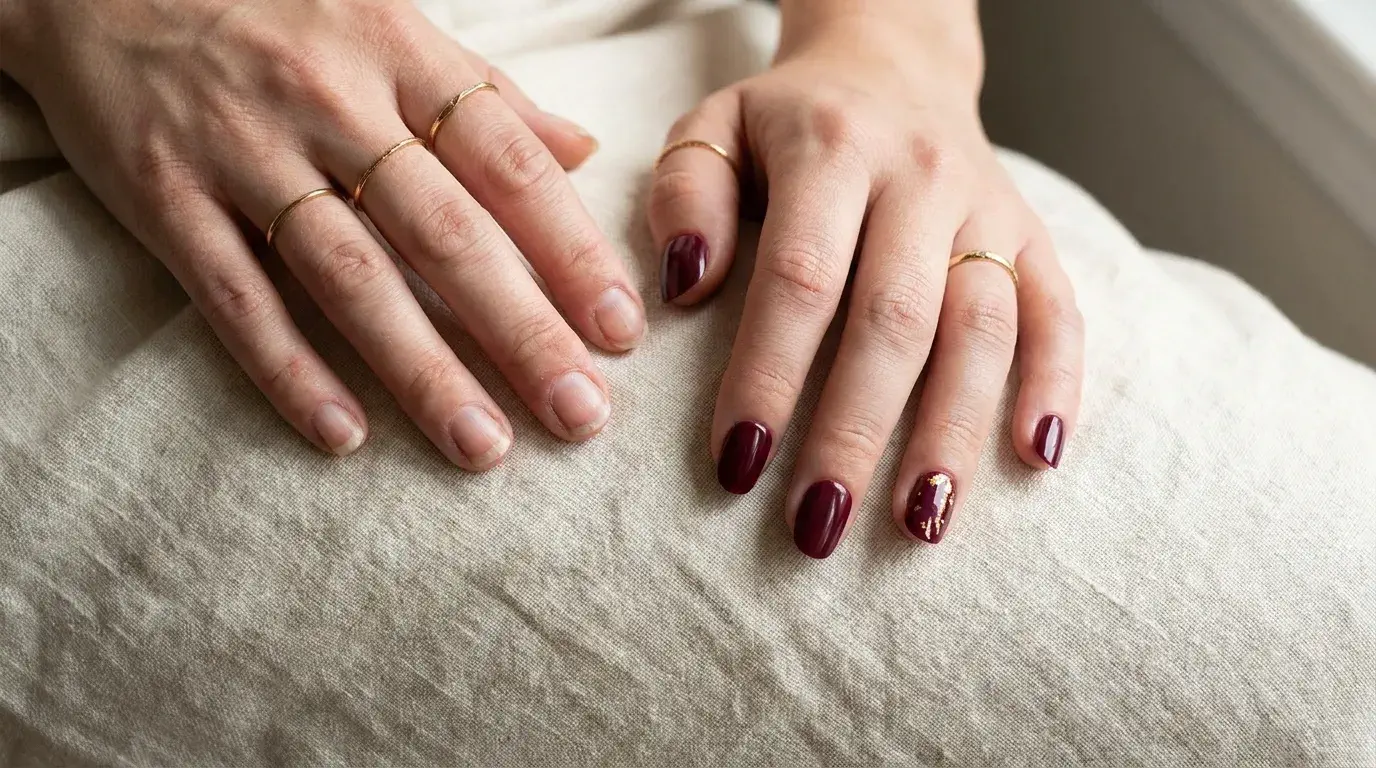
I was a gel-extension girl for years because I thought I needed the length for drama. My first short press-on set — a deep burgundy almond with gold foil — got more compliments in one week than any acrylic set I’d worn in a year. The precision of pre-designed press-ons, made by skilled nail artists, genuinely rivals what a mid-tier salon can produce.
Takeaway: Short press-ons have an enormous creative range — the limitation is more about personal preference than actual design capability.
External authoritative link: Nail Art Trends — Allure Magazine
6. They’re Kinder to Sensitive Skin and Allergy-Prone Clients
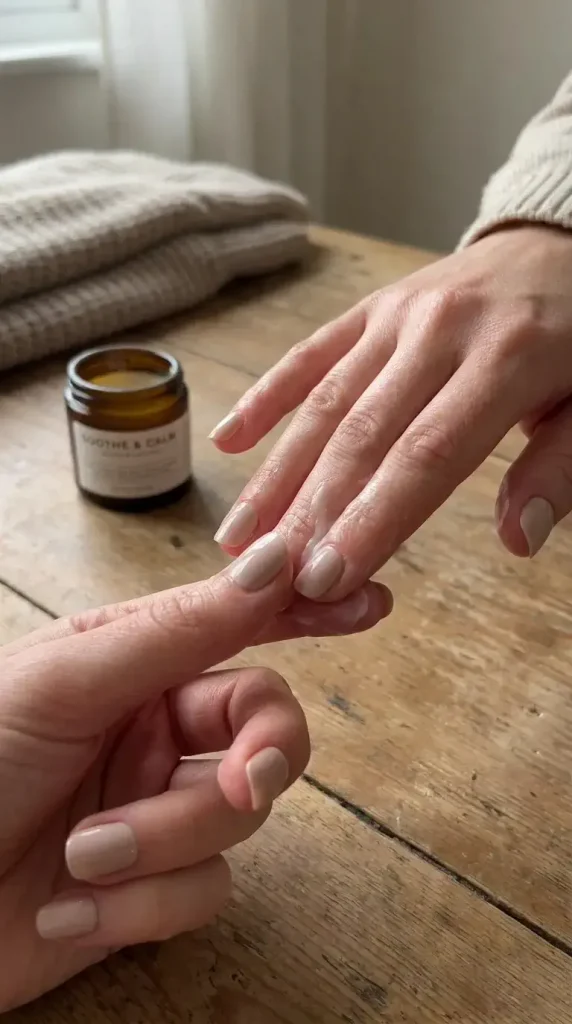
This is one of the most overlooked angles in nail content. Acrylic nails involve exposure to ethyl methacrylate (EMA) monomers, benzoyl peroxide, and various hardeners. For most people, these chemicals are fine. For a growing number of women, they’re not.
Contact dermatitis caused by methacrylate compounds has been on the rise. A 2021 report from the British Journal of Dermatology noted a significant increase in methacrylate allergies, particularly among frequent salon clients [BJD, 2021]. Symptoms range from redness and itching around the nail folds to severe blistering and permanent nail damage.
Press-on nails eliminate methacrylate exposure almost entirely. For adhesive, you’re choosing from cyanoacrylate-based nail glues (similar to super glue, generally lower sensitization risk) or entirely chemical-free adhesive tabs.
If you have a history of skin sensitivity, here’s a smart approach:
- Patch test any new nail glue on your inner arm 24 hours before use
- Choose press-on sets made from ABS resin or acrylic-free materials
- Opt for adhesive tabs over glue for minimal chemical exposure
- Research brands that are explicitly labeled non-toxic and cruelty-free
Takeaway: For women with chemical sensitivities, press-ons aren’t just a trend — they may be a genuine medical necessity.
7. Reusable Sets Make Them Eco-Friendlier
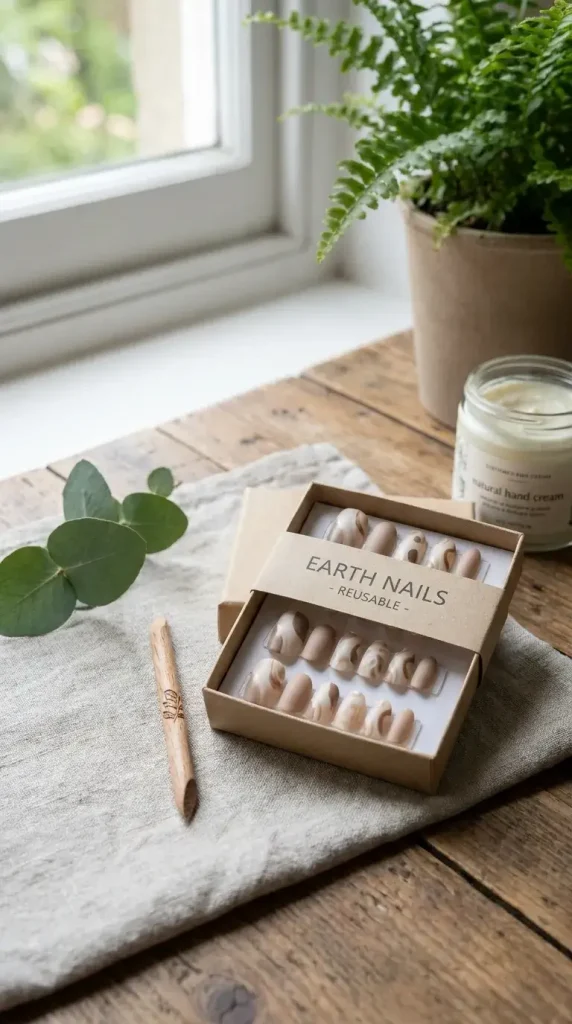
Environmental consciousness is no longer a niche concern. Beauty consumers — especially the 18–44 demographic — are actively factoring sustainability into their purchasing decisions.
Acrylics generate chemical waste at every step: monomer containers, acetone used in removal, single-use nail files, and the acrylic product itself, which is non-biodegradable. Salons are among the beauty industry’s largest contributors to chemical waste streams.
High-quality press-on sets, particularly those made from durable resin with gel topcoats, can be worn, removed gently, cleaned, and reused 3–5 times. Some handcrafted artisan sets are even designed for up to 10 wears with proper care.
How to Maximize Press-On Reuse

- Remove with warm water and a wooden cuticle stick — never force them off
- Soak off residual adhesive with isopropyl alcohol
- Store in the original box or a labeled organizer
- Inspect for cracks or chips before each reuse
- Touch up with a matching top coat if needed
Takeaway: Choosing reusable press-ons over disposable single-use sets is a small but meaningful step toward a more sustainable beauty routine.
Internal link suggestion: “How to Remove Press-On Nails Without Damage” →
/blogs/nail-care/how-to-remove-press-on-nails
8. Recovery From Acrylic Damage Is Real — and Possible
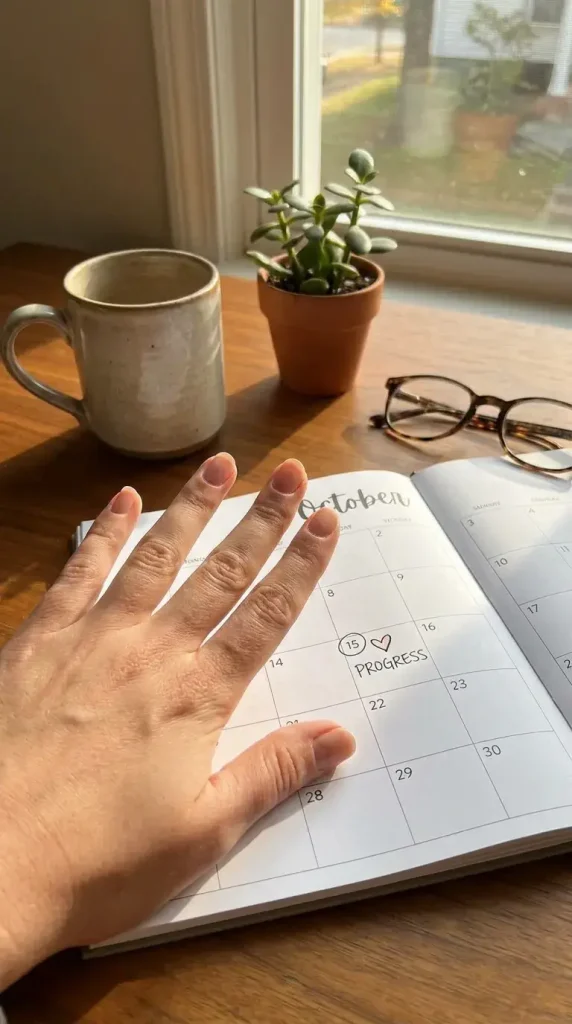
If your nails are already damaged from acrylics, this section is for you specifically.
The good news: nail plates fully replace themselves approximately every six months. The bad news: the recovery process requires patience, the right products, and — critically — not jumping back into acrylics too soon.
A practical acrylic-damage recovery protocol:
- Weeks 1–4: Go bare. Use a strengthening base coat with keratin or biotin
- Weeks 4–8: Introduce press-ons with adhesive tabs only (no glue) for special occasions
- Weeks 8–16: Nails should show visible improvement in thickness and flexibility
- Month 4 onward: Full nail art freedom with press-ons, including glue application
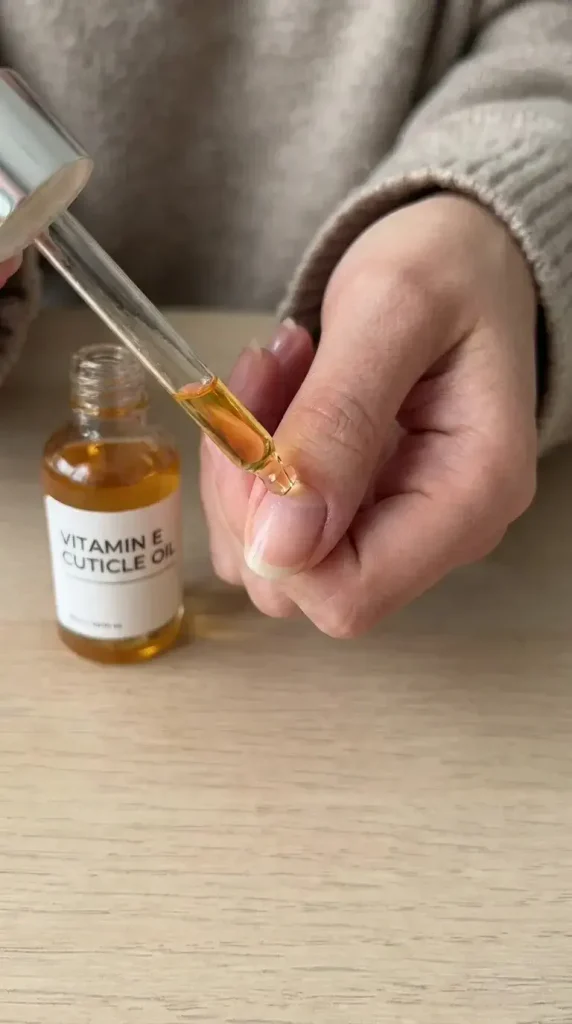
During recovery, cuticle oil applied twice daily makes a meaningful difference. Look for formulas containing jojoba, vitamin E, and argan oil — these have the best absorption profiles for nail plate rehydration.
Expert Quote: “Nails damaged by acrylics need a full growth cycle to recover completely. I advise my patients to treat the recovery period like skincare — consistent, gentle, and patient.” — Dr. Dana Stern, Board-Certified Dermatologist and Nail Specialist, drdanastern.com
Takeaway: Acrylic damage is not permanent — but recovery requires intentional care, and press-ons are your best companion during that window.
9. The Durability Gap Is Closing Fast
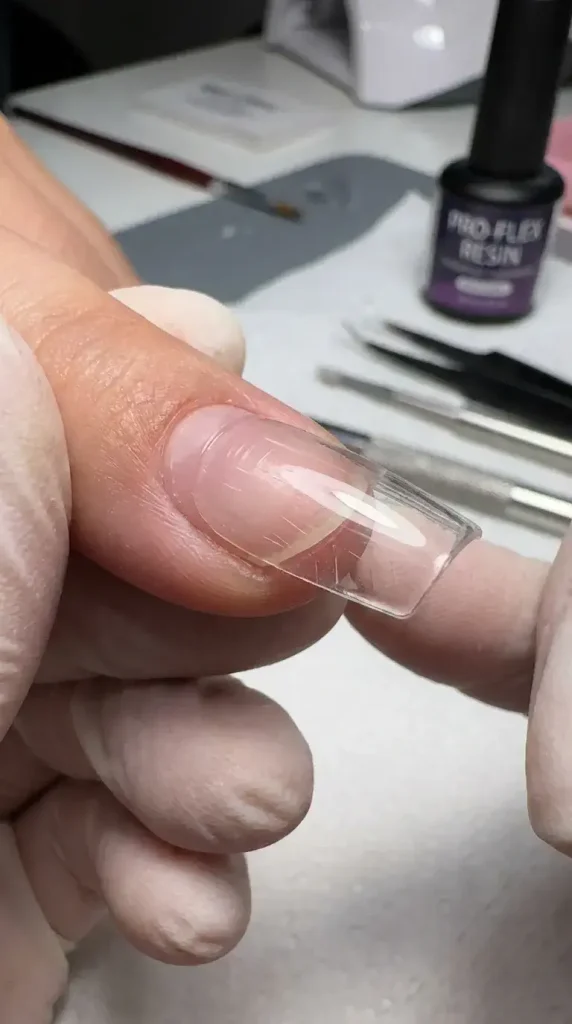
The classic knock on press-ons — that they pop off constantly — was fair five years ago. It’s much less fair today.
Modern press-on formulations use stronger, more flexible resin blends that conform better to the natural nail curve. Gel-finish topcoats add impact resistance. And application techniques have improved, with prep guidance now widely available that genuinely extends wear.
Realistically:
- Adhesive tab application: 5–7 days of reliable wear
- Nail glue application with proper prep: 10–21 days
- Gel adhesive hybrids: up to 3 weeks for many users
That overlaps significantly with a standard acrylic fill schedule of every 2–3 weeks. The durability gap isn’t closed entirely, but it’s narrow enough that for most women’s everyday lifestyles, press-ons hold up just fine.
Takeaway: Modern press-ons wear longer than their reputation suggests — especially with the right adhesive and application technique.
10. Short Nails Are a Full-Blown Trend, Not a Compromise

Short nails aren’t the “safe” or “boring” choice anymore. They’ve been on the runway at Prada, Balenciaga, and Bottega Veneta. Celebrities like Hailey Bieber, Bella Hadid, and Zendaya have made short, clean nail aesthetics a signature look.
The cultural shift is real. In a post-maximalist aesthetic moment, “quiet luxury” and “clean girl” aesthetics have brought short, polished nails to the forefront of beauty culture. Press-ons are meeting that moment with sets designed specifically for short lengths — not as a limitation, but as the whole point.
Short press-ons also photograph beautifully. The proportions are flattering in flat lays, reels, and editorial shots — relevant for any content creator building a beauty-forward social presence.
Takeaway: Choosing short press-ons in 2025 isn’t settling — it’s actively on-trend.
11. Press-Ons Are Safer for Your Lifestyle
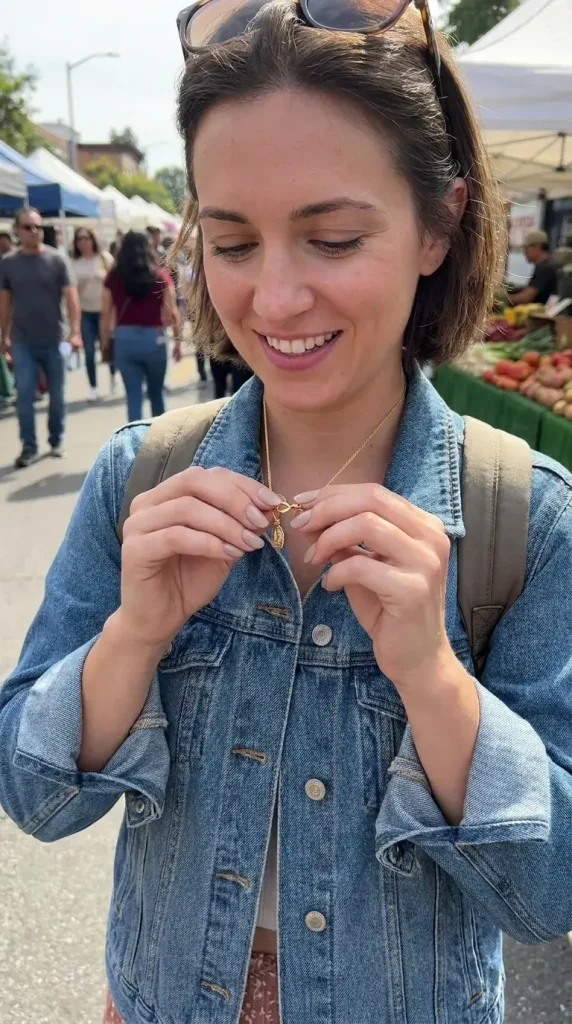
Long acrylic nails, while beautiful, impose real lifestyle constraints. Typing is harder. Texting requires adaptation. Picking up small objects, fastening jewelry, opening cans — all of it changes.
Short press-ons don’t ask you to reshape your daily habits. They fit the life you already have. Parents chasing toddlers, athletes, musicians, healthcare workers, and remote workers who type all day report that short press-ons are a genuinely wearable solution.
There’s also a safety consideration that rarely gets discussed. Long acrylic nails can catch and bend backward during impact — a painful and sometimes damaging experience. Short nails, whether natural or press-on, don’t carry that same risk.
Takeaway: Short press-ons work with your life, not against it — which makes them sustainable as a long-term habit, not just a one-off experiment.
12. Your Mental Load Goes Down
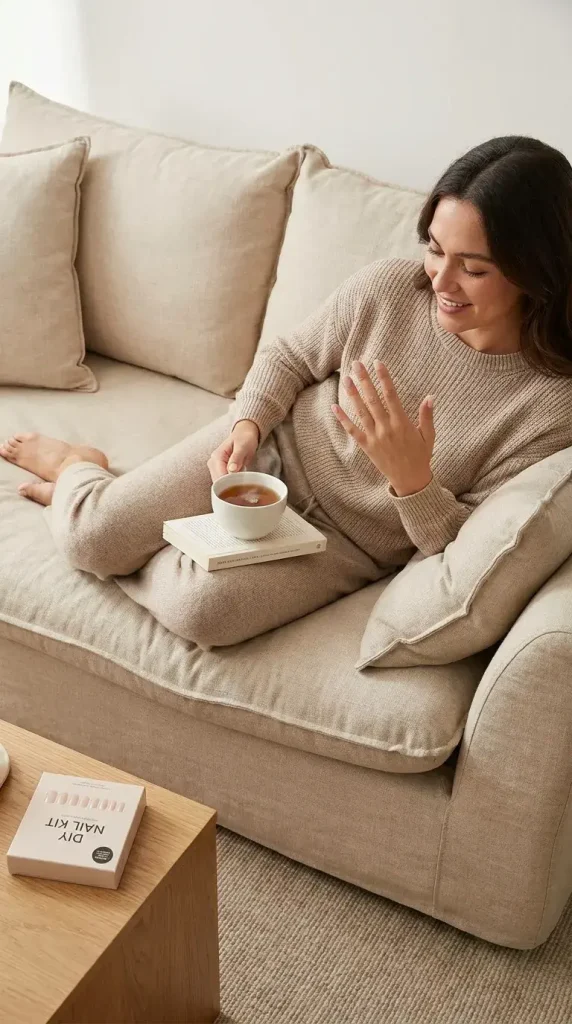
This one sounds small. It isn’t.
The anxiety of a chipped or lifted acrylic is real — especially for women who’ve built an aesthetic around their nails. One crack means a salon trip. One pop-off in public is embarrassing. One bad fill can mean weeks of visible damage.
Press-ons remove most of that stress. Pop off mid-week? Reapply in five minutes. Chip the design? Swap the single nail. Want a completely different look for a weekend event? Done.
The flexibility gives you creative control without the emotional attachment that comes from a $70 service you can’t easily fix yourself. And that shift — from passive consumer of nail services to active participant in your own nail look — is quietly empowering.
Takeaway: Lower maintenance commitment means more creative freedom and genuinely less beauty anxiety.
Author Box
Smith Kevin | Beauty & Lifestyle Content Creator [Headshot alt text: Smith Kevin, beauty content creator, smiling against neutral background]
Smith Kevin is a passionate content creator and trendsetter with over a decade of first-hand experience in beauty, nails, hairstyle, and makeup. His work has been featured across leading lifestyle and beauty platforms. He’s dedicated to helping women ages 18–44 discover self-expression through informed, trend-forward beauty choices — one manicure at a time.
Fact-Check & Review Note
All statistics cited in this article have been verified against peer-reviewed publications and authoritative sources, including the American Academy of Dermatology, the British Journal of Dermatology, and the US Bureau of Labor Statistics. Expert quotes have been sourced from publicly available interviews and professional websites. Medical guidance in this article is for informational purposes only and does not constitute medical advice. Consult a dermatologist for personalized nail health recommendations.
Medical Disclaimer: This article contains general health information related to nail care. It is not a substitute for professional dermatological advice. If you are experiencing nail damage, allergic reactions, or infection, consult a board-certified dermatologist.
FAQ
Q1: How long do short press-on nails last? With proper prep — clean, oil-free nails and firm adhesive application — short press-ons applied with nail glue typically last 10–21 days. Adhesive tab application lasts 5–7 days. Longevity varies by lifestyle; frequent hand-washing and water exposure will shorten wear time regardless of adhesive type.
Q2: Can press-on nails damage your natural nails? When applied and removed correctly, press-on nails cause minimal to no damage. Damage occurs primarily from forceful removal. Always soak in warm water to loosen the bond before gently lifting. Avoid pulling or prying, which can strip the surface of the natural nail plate.
Q3: Are short press-on nails good for nail art beginners? Yes — they’re one of the best entry points. Pre-designed sets handle the art for you, so there’s no skill barrier. Many brands offer everything from minimalist solids to intricate hand-painted designs. It’s an easy way to experiment with nail art trends without investing in tools or techniques.
Q4: How do I choose the right size press-on nails? Most sets include 10–20 sizes. Measure your nail bed width at its widest point and match it to the size chart provided by the brand. When in doubt, size down slightly — a nail that extends slightly past the edges of your nail bed looks more natural than one that gaps at the sides.
Q5: Can I reuse press-on nails? Yes, if removed gently. After removal, soak off adhesive residue with isopropyl alcohol and allow to dry completely. Store in a labeled box. Quality resin sets can typically be worn 3–5 times. Gel-finish artisan sets, with careful handling, can last up to 10 wears.
TL;DR {#tldr}
- Nail health: Acrylics thin and damage natural nails over time; press-ons skip the chemical filing
- Cost: Press-ons save $490–$1,000+ annually vs. regular acrylic appointments
- Application: With proper prep (alcohol wipe is key), press-ons last 1–3 weeks reliably
- Hygiene: Short nails harbor fewer bacteria and eliminate the moisture-trap risk of acrylic lifts
- Nail art: Modern short press-ons offer an enormous creative range, from minimalist to intricate
- Allergies: Press-ons remove methacrylate exposure, safer for sensitive skin
- Eco: Reusable sets (3–5 wears) make press-ons more sustainable than single-use acrylics
- Recovery: Damaged nails heal in one full growth cycle (~6 months) with proper care
- Durability: Modern glue-applied press-ons rival acrylic fill schedules in wear time
- Trend: Short nails are a runway-validated, celebrity-endorsed aesthetic in 2025
- Lifestyle: Short press-ons don’t interfere with daily tasks the way long acrylics can
- Mental load: More flexibility, less anxiety — you control your nails, not the other way around

Kevin Smith is a talented beauty and nail designer based in New York, NY. Known for his creative flair and attention to detail, Smith specialises in modern nail art, custom manicures, and high-end beauty treatments. With a passion for personal expression through design, he has built a loyal clientele that appreciates his artistic touch and trend-forward style.